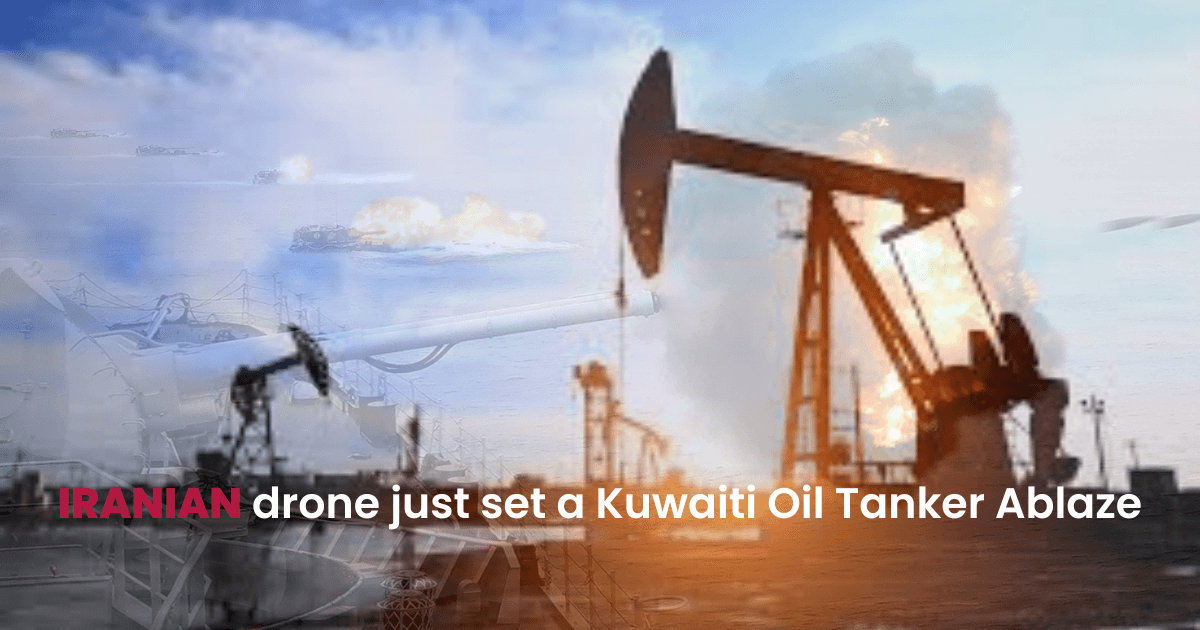
An Iranian drone just set a Kuwaiti oil tanker ablaze off Dubai's coast. Oil is up ~50% since the war started, and the Strait of Hormuz remains blocked. Trade the outcomes on Predicta prediction markets.
Here's What It Means for Your Gold and Oil Positions
Two million barrels of crude were on fire off the coast of Dubai this morning.
An Iranian drone struck the Al Salmi, a fully loaded Kuwaiti tanker, in what is now the most brazen attack on commercial shipping since the Iran war began on February 28. All crew members are safe. The oil market's nerves are not.
If you're running a Gold long or sitting on Oil exposure in Nairobi or Lagos right now, this changes your calculus today — not next week.
The strike targeted a vessel carrying crude through waters adjacent to Dubai — not some remote stretch of open ocean, but the doorstep of a global logistics hub. Dubai officials say the fire has been contained and extinguished, but the signal is unmistakable: Iran is willing to hit commercial shipping from neutral Gulf states, not just military targets.
This follows Iran's blockade of the Strait of Hormuz — the chokepoint carrying roughly 20% of the world's oil supply — which has already pushed crude prices up approximately 50% since the conflict started.
War Escalation, Failing Playbooks, and No Clear Endgame
Here's what makes Tuesday's attack different from the background noise of a month-old war.
The White House market-calming playbook is breaking down. CNBC reported that the core problem for investors is that nobody knows what the endgame actually is. Traders have stopped buying the dip on diplomatic hints.
Meanwhile, U.S. stocks suffered their largest daily decline since the war began oil price surges drove the sell-off.
And here's my contrarian take:
Gold may be the most mispriced asset in this entire crisis. The conventional explanation for Gold's weakness — rising oil drives inflation expectations, which pushes up rate expectations, which crushes Gold — makes mechanical sense. But it assumes the war ends cleanly. Today's tanker attack suggests it won't. If Hormuz disruption persists and a downturn materialises, central banks will be forced to choose between fighting inflation and preventing recession. The moment they blink — and they will blink — Gold reprices violently upward.
You can trade Gold's hourly close right now on Predicta with $10 on us — no deposit required. Your maximum loss is what you pay for the contract. No stop to get hunted, no spread widening at the worst moment.
The tanker will be towed. The oil spill (if any) will be contained. But the strategic message — that neutral shipping is now a target — reprices every insurance premium, every freight rate, and every barrel of crude transiting the Gulf. As long as Hormuz stays contested, the supply premium on oil isn't going anywhere.
For traders in Nairobi, Lagos, and Karachi running XAUUSD or Oil positions on MT5, this is the week where defined risk stops being a nice-to-have and becomes the only sane approach.
The war is a month old. Oil is up ~50%. The market says these trends continue — do you agree, or is a reversal coming?
Have a strong view on Oil, Gold, or the next geopolitical flashpoint? Create a market on Predicta Markets, earn from every trade on it, and let the crowd tell you if you're right.
Protect your trading positions from volatility with our advanced CFD hedging tool. Designed for traders in Nigeria, Kenya, India, and the Philippines, this calculator helps you manage risk for GOLD, NASDAQ, EURUSD, and USDJPY trades using high-leverage event contracts.
Enter your CFD position details to find hedging recommendations
Hedging allows you to stay in the market longer or minimise losses if your stop loss is hit. It effectively turns a binary loss into a managed risk.
Predicta Markets supports major global tickers including Gold (XAUUSD),Oil (CL1!), Nasdaq (NQ1!), and major Forex pairs like USDJPY.
Contracts are priced between 0¢ and 100¢. If the event occurs (e.g., price expires below your SL), the contract pays out a full $1.00, providing high-leverage compensation.